
Kasaragod: A major scientific advance under the SERB-SURE ANRF project has demonstrated a new pathway to significantly enhance nonlinear optical efficiency while preserving optical transparency, a long-standing challenge in photonic material design.
Researchers from Government College Kasaragod have reported a novel molecular strategy that improves nonlinear optical response without shifting absorption into the visible region, making the approach highly relevant for advanced photonic applications.
The study, accepted for publication in the Royal Society of Chemistry journal Physical Chemistry Chemical Physics, focuses on overcoming limitations associated with conventional through-bond charge transfer (TBCT) systems.
Also Read: Prof T N Guru Row Highlights Advanced Insights in Noncovalent Bonding at CSIR-NCL Event
In such systems, extending π-conjugation between donor and acceptor units typically strengthens intramolecular charge transfer and boosts nonlinear optical efficiency, but also causes an undesirable red shift in the absorption spectrum, reducing transparency.
Dual Charge Transfer Strategy Enhances Nonlinear Optical Efficiency
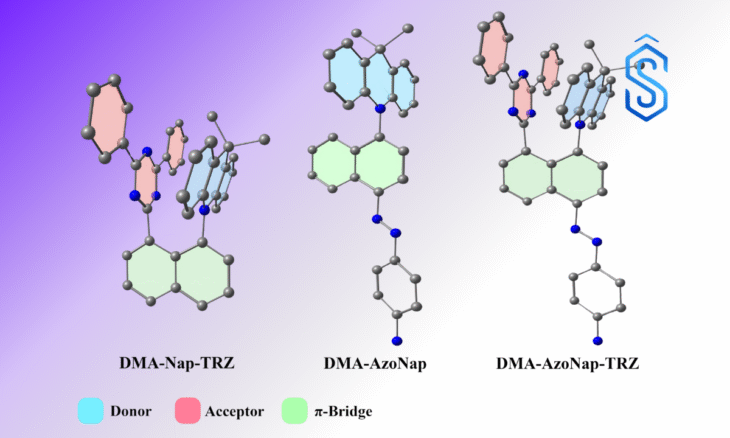
To address this issue, the research team introduced a complementary through-space charge transfer (TSCT) pathway alongside TBCT within a carefully designed naphthalene–azobenzene molecular framework.
This dual charge transfer mechanism enables strong electronic interaction between donor and acceptor units without excessively lengthening the conjugated backbone, thereby maintaining absorption outside the visible region.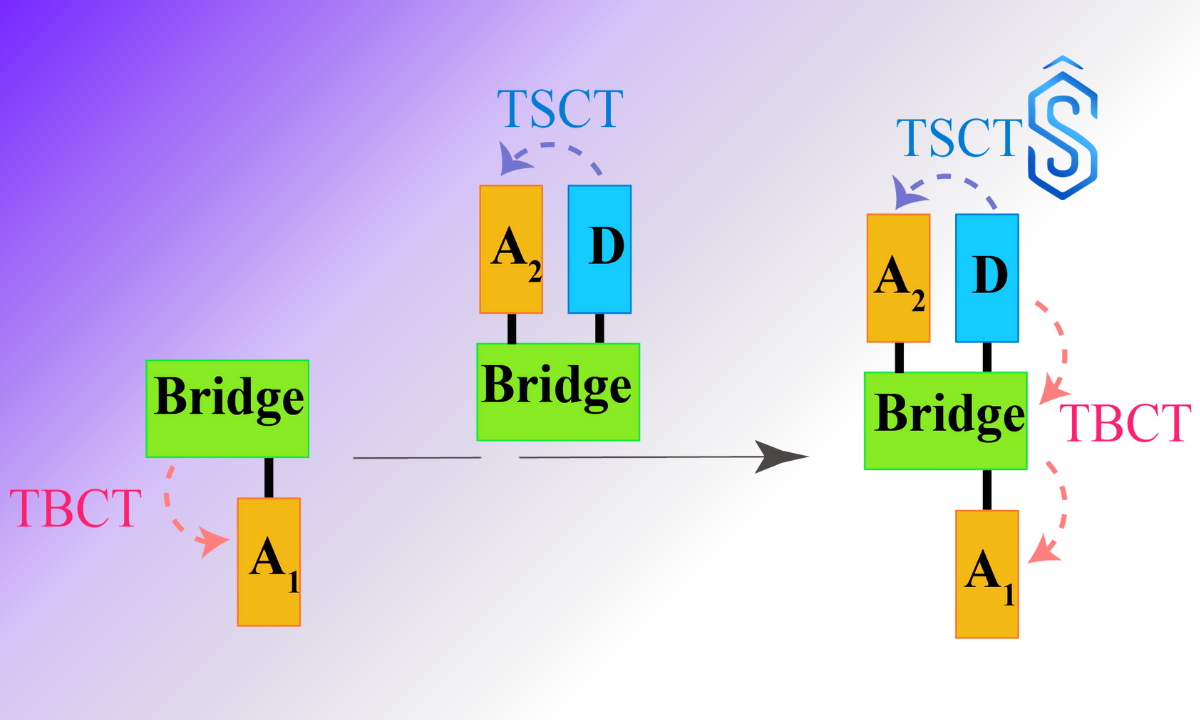
By incorporating TSCT in addition to TBCT, the researchers achieved an enhancement of up to 21.7% in hyperpolarizability, a key parameter governing nonlinear optical efficiency.
Crucially, this improvement was realized without inducing the typical spectral red shift that compromises optical transparency.
Also Read: CSIR-NCL Develops Self-Healing Hydrogel Electrolyte for Safer, Flexible Zinc-Metal Batteries
The findings highlight strong potential for applications that demand high nonlinear optical efficiency with minimal optical loss, including laser technologies, electro-optic modulators, photonic circuits, and optical limiting devices.
The work is led by Dr. Renjith R., Assistant Professor, Department of Physics, Government College Kasaragod, and represents a major outcome of the SERB (ANRF)–SURE project awarded to him (File No: SUR/2022/001435).
The research team includes Arjun J. (SERB-SURE Project Assistant) and Aneesh Kumar R. (PhD Scholar, University of Kerala).
The study also benefited from collaborative contributions by Dr Navjot Kaur (Assistant Professor, Department of Chemistry, SGT University, Gurgaon, New Delhi), Rinu Jacob (Research Scholar, Pondicherry University), and Dr Ramanathan Padmanabhan (Assistant Professor, Department of Chemistry, Pondicherry University).